Chucky Buck: The Playful Handwritten Font for Creative Projects
When you're working on a project that needs a human touch, the typeface you choose can completely shift the mood. Stiff, corporate fonts have their place, but sometimes you need something that feels like it was scribbled by a friend or sketched on a napkin. That's where Chucky Buck enters the conversation. It's a modern handwritten font that balances casual energy with enough structure to remain readable and professional across a surprising range of applications.
I've spent years selecting fonts for branding packages, editorial layouts, and digital campaigns, and I can tell you that finding a handwritten typeface that doesn't sacrifice legibility is harder than most people think. Many script fonts look gorgeous at large sizes but fall apart when you reduce them or try to use them in longer text. Chucky Buck handles this challenge differently. Its letterforms are open and well-spaced, with a natural rhythm that mimics actual handwriting without descending into chaos.
What Makes This Handwritten Typeface Stand Out
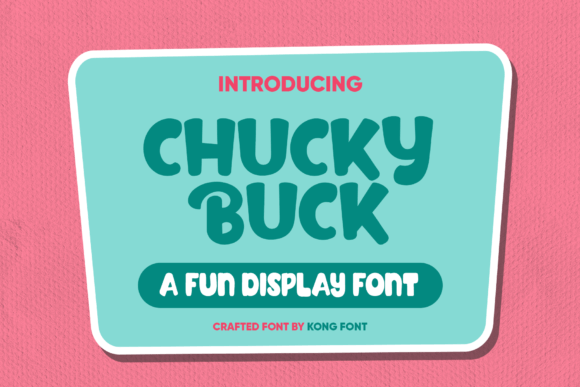
The personality of Chucky Buck is confident and approachable. The strokes have a slightly varied weight, which gives the impression that someone actually wrote each letter by hand rather than a machine generating perfectly uniform curves. That organic quality is exactly what makes handwritten fonts feel authentic. At the same time, the overall consistency of the baseline and x-height keeps everything anchored. You won't see letters bouncing wildly up and down the way they do in some overly expressive script fonts.
Visually, this is a display font that leans into modern sensibilities. It avoids the ornamental flourishes of traditional calligraphy and instead opts for a cleaner, more contemporary aesthetic. The letter connections are smooth but not overly swashy, and the overall impression is friendly without being childish. If you've been searching for a creative font that bridges the gap between playful and polished, this typeface occupies that middle ground quite well.
From a practical standpoint, Chucky Buck is a premium font designed for compatibility with widely used creative tools. Whether you're working in Adobe Photoshop, Illustrator, or Silhouette Design Studio, integration is straightforward. That cross-platform flexibility matters when you're juggling multiple projects or collaborating with a team that uses different software.
Where Chucky Buck Works Best
Let's talk about real-world applications, because that's what ultimately determines whether a font earns its spot in your library.
Branding and Logo Design
For logo design, Chucky Buck works particularly well for brands that want to project warmth, creativity, and approachability. Think bakeries, boutique shops, lifestyle blogs, children's brands, or artisan product lines. A handwritten typeface in a logo signals that there's a real person behind the business. It tells customers they're dealing with a small operation that cares about craft and individuality rather than a faceless corporation.
That said, pairing is critical here. A handwritten font used alone for an entire logo can sometimes feel incomplete. I'd recommend combining Chucky Buck with a clean sans serif font for the tagline or secondary text. The contrast between the organic letterforms and a geometric sans creates visual interest and improves overall readability.
Packaging and Print Design
In packaging design, this typeface shines on labels, hang tags, thank-you cards, and product descriptions where a personal voice matters. Imagine a candle label where the scent name is set in Chucky Buck while the ingredients and weight use a simple serif font. That hierarchy immediately draws the eye to the most important information while maintaining a cohesive aesthetic.
For editorial design, including magazines, lookbooks, and zines, handwritten fonts like this one work beautifully for pull quotes, section headers, and feature titles. They break up the monotony of body text and give pages a more dynamic, layered feel. Just be mindful of context. A finance publication probably isn't the right fit, but a food magazine, travel journal, or creative arts publication? Perfect.
Digital and Social Media
Social media graphics are arguably where Chucky Buck can have the most immediate impact. Platforms like Instagram and Pinterest reward visual personality, and a distinctive handwritten font helps your posts stand out in crowded feeds. Use it for quote graphics, sale announcements, story overlays, or carousel headers. The casual tone matches the conversational nature of social content, which helps with audience engagement.
For web design, handwritten fonts should be used selectively. They're excellent for hero section headlines, call-to-action buttons, or featured content areas, but they generally don't work well for navigation menus or body paragraphs. Chucky Buck at a large size on a landing page creates an immediate emotional connection, especially when paired with lifestyle photography or illustrated elements.
Personal and Commercial Crafting
Crafters will find plenty of use for this font in personal projects like wedding invitations, birthday cards, scrapbook layouts, and custom apparel designs. Its compatibility with Silhouette Design Studio makes it especially useful for vinyl cutting, heat transfers, and other hands-on projects. Since Chucky Buck is also a commercial font, small business owners can use it on products they sell without worrying about licensing issues, though it's always wise to review the specific license terms included with your purchase.
Practical Tips for Using Chucky Buck Effectively
Choosing the right font is only half the equation. How you use it determines the final result. Here are some observations from working with handwritten fonts in professional settings.
Test at multiple sizes before committing. A font that looks wonderful at 72 points on your screen might lose its charm at 18 points in a printed brochure. Chucky Buck performs well across a reasonable range of sizes, but always proof your work at the actual output dimensions.
Pay attention to kerning and spacing. Handwritten fonts sometimes need manual adjustments, especially when certain letter combinations create awkward gaps or overlaps. Most design applications let you fine-tune individual character pairs, and taking a few extra minutes to adjust spacing can dramatically improve the final appearance.
Consider your font pairing strategy carefully. As I mentioned, combining Chucky Buck with a sans serif or serif font creates the strongest results. For a modern, clean look, try pairing it with something like a geometric sans. For something more traditional, a classic script font or transitional serif can work. The key is contrast. If both fonts are too similar in weight or style, the hierarchy becomes muddy and the design loses clarity.
Don't overuse it. The appeal of a distinctive handwritten font is that it stands out. If you set everything in Chucky Buck, the effect is diluted and the text becomes exhausting to read. Reserve it for headlines, short phrases, and accent text where its personality can shine without overwhelming the viewer.
Review the full character set. Before starting a project, explore the complete glyph map. Many premium fonts include alternate characters, ligatures, and extended language support that can elevate your design. Knowing what's available ahead of time saves you from last-minute surprises and gives you more creative options to work with.
Building a Stronger Brand Identity With the Right Typography
Modern typography is about more than just picking fonts that look nice. Every typeface carries emotional weight and communicates something about the brand or message it represents. When you select a font like Chucky Buck for your brand identity, you're making a deliberate choice to appear approachable, creative, and human.
Consistency across touchpoints reinforces that perception. If your website uses Chucky Buck for headlines, carry that same typeface into your social media templates, email headers, printed materials, and packaging. Repetition builds recognition. Over time, your audience will associate that distinctive handwritten style with your brand before they even read the words.
The best design assets are the ones you actually use well, not the ones collecting dust in a folder. If your projects call for warmth, personality, and a distinctly human voice, Chucky Buck is a typeface worth exploring. It delivers real versatility across digital and print contexts without sacrificing the authentic, handcrafted quality that makes handwritten fonts so compelling in the first place.