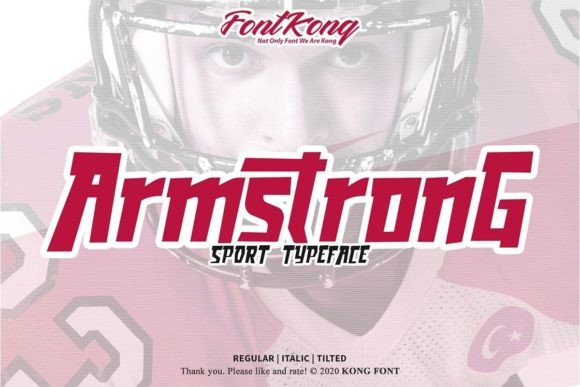
Armstrong: The Modern Handwritten Font with Real Character
There’s a reason so many design projects feel flat. They rely on the same handful of safe, predictable typefaces. When you need to inject genuine personality, warmth, and a human touch, a premium script font like Armstrong becomes an invaluable design asset. Created by Kong Font Studio, Armstrong isn’t just another handwritten font; it’s a versatile, modern tool built for creators who want their work to feel approachable and authentic. It strikes a rare balance—it’s playful enough for a craft project but polished enough for a brand logo.
A Typeface That Feels Handmade, Not Homemade
Let’s talk about what makes Armstrong visually distinct. This isn’t a messy, overly casual script. The letterforms have a confident, flowing rhythm with a natural baseline that mimics real handwriting. You’ll notice a clean, modern aesthetic with smooth curves and a consistent stroke weight that ensures clarity. The connections between letters are thoughtfully designed, preventing the text from feeling cluttered or difficult to read. Its personality is energetic and friendly, making it an excellent choice for projects that need to connect on a personal level. As a modern typography choice, it avoids the vintage nostalgia of many script fonts, feeling fresh and relevant for today’s digital and print landscapes.
Practical Applications: Where Armstrong Shines
Understanding a font’s strengths is key to using it effectively. Armstrong’s versatility is one of its biggest assets. It’s not a one-trick pony; it’s a workhorse for creative expression.
- Branding & Logo Design: For entrepreneurs and small business owners, Armstrong can form the core of a memorable brand identity. It’s perfect for boutique shops, creative agencies, lifestyle blogs, and artisanal products where a personal, human connection is part of the value proposition. Use it for your primary logotype to convey approachability and creativity.
- Marketing & Social Media: In a feed full of stiff corporate fonts, Armstrong stands out. It’s ideal for creating engaging social media graphics, quote cards, promotional banners, and email headers. Its readability at various sizes makes it a reliable choice for digital marketing materials that need to capture attention quickly.
- Publishing & Editorial Design: While not suited for long body text, Armstrong excels in editorial design as a display font. Think magazine pull quotes, chapter headings in a cookbook, title cards for a blog series, or stylized text in a digital publication. It adds a layer of sophistication and personality to layouts.
- Packaging & Product Design: For physical products, especially in the food, beauty, or craft sectors, Armstrong can elevate packaging design. It works beautifully on labels, tags, and boxes, giving products a handmade, premium feel that suggests care and quality.
- Personal Projects & Crafting: This is where Armstrong truly feels at home. It’s fully compatible with popular design tools like Photoshop and Silhouette Design Studio, making it a go-to for crafters. Use it for wedding invitations, greeting cards, custom apparel, vinyl decals, and scrapbooking. Its clean lines ensure it cuts cleanly on cutting machines.
Making Armstrong Work for Your Project
Choosing the right creative font is just the first step. Using it well is what separates good design from great design. Here’s how to integrate Armstrong effectively into your workflow.
Evaluating Fit and Font Pairings
Before you commit, consider the project’s tone. Armstrong conveys playfulness, creativity, and warmth. If your project requires extreme formality or a stark, minimalist vibe, a sans serif font or a traditional serif font might be a better primary choice. However, Armstrong often works brilliantly as a secondary font in a pairing.
A classic and effective strategy is to pair a script font like Armstrong with a clean, neutral sans serif. For example:
- Use Armstrong for headlines and a sans serif like Montserrat or Open Sans for body copy.
- Combine it with a sturdy serif like Lora or Merriweather for a look that mixes classic and contemporary.
Always test your pairings. Create a mockup with real content to see how the fonts interact. Check the visual hierarchy—does your headline command attention without overwhelming the supporting text? The goal is harmony, not competition.
Readability and Licensing: The Non-Negotiables
Playfulness should never come at the cost of legibility. Test Armstrong at the size you intend to use it. While it’s designed for clarity, ensure it remains easy to read for your audience, especially in shorter phrases and headlines. Avoid setting paragraphs of body text in any script or handwritten font; it’s a recipe for reader fatigue.
Finally, consider the licensing. Armstrong is a commercial font, which is typical for high-quality, premium design assets. This license typically covers a wide range of uses, from personal projects to commercial applications like client work, merchandise, and digital products. However, always review the specific license agreement from Kong Font Studio. Understanding the terms ensures you’re using the font legally and ethically, which is a cornerstone of professional design practice.
A Final Thought on Brand Consistency
If you choose Armstrong as part of your brand identity, use it consistently. Define exactly where and how it will be used—in your logo, on your website, in your social media templates, and on printed materials. This consistency builds recognition and professionalism. A premium font like this is an investment in your brand’s voice. Used thoughtfully, it can become a recognizable signature that sets you apart, tells your story, and makes your audience feel right at home.