Quirkus: Making Sci-Fi and Bold Ideas Come Alive
Understanding the Visual Power of Quirkus
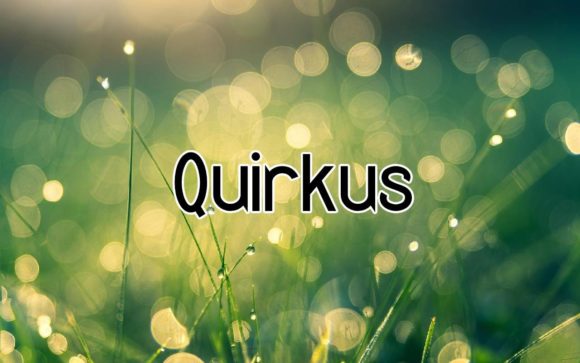
When you first encounter Quirkus, you notice its presence immediately. Designed by Peter Wiegel, this premium font isn't trying to whisper; it’s designed to shout. It is a bold and thick lettered display font, meaning it was built specifically for impact rather than long-form reading. The defining characteristic of Quirkus is its geometric solidity. The strokes are heavy, uniform, and confident. There is an industrial weight to the letterforms that feels grounded, yet the shapes themselves carry a futuristic edge.
The personality of Quirkus is assertive and technical. It avoids the soft curves of a script font or the neutral simplicity of a standard sans serif font. Instead, it leans into a style that feels engineered. You can see subtle influences of sci-fi aesthetics in its construction—perhaps the way a curve meets a straight line or how the negative space is distributed. It feels like a typeface you would see stamped on the side of a spaceship hull or etched into the interface of a high-tech control panel. For anyone looking to establish a strong brand identity, this font provides a foundation of strength and modernity.
Where Quirkus Fits: Practical Applications for Creators
Choosing the right typeface is often about context. You wouldn't use a delicate handwritten font for a construction company's safety manual, just as you wouldn't use a formal serif font for a neon-themed dance party invitation. Quirkus occupies a specific, high-energy niche. It is an ideal choice for projects that require a "loud" voice without being chaotic.
For logo design, Quirkus is a powerhouse. Because the letterforms are so bold, they scale down well in small formats, maintaining legibility where thinner fonts might disappear. It works exceptionally well for tech startups, gaming channels, fitness brands, or any entity that wants to project authority and futuristic thinking. If you are a graphic designer working on packaging design, consider Quirkus for product names that need to pop on a crowded shelf. Its thickness ensures that the name is the first thing a customer sees, even from a distance.
In the realm of digital design, Quirkus shines in web design headers and social media graphics. On platforms like Instagram or TikTok, where users scroll rapidly, a bold display font is essential for stopping the thumb. It creates immediate visual hierarchy, drawing the eye to the headline before the viewer decides whether to read the rest of the content. Content creators and bloggers can use it for YouTube thumbnails or blog post headers to create a consistent, recognizable aesthetic that audiences learn to associate with their content.
Strategic Use: Hierarchy, Pairing, and Readability
Using a heavy display font effectively requires strategy. One of the most common mistakes in modern typography is using a display font for body text. Because Quirkus is so thick and wide, using it for paragraphs would quickly cause eye strain and ruin the reading experience. Its strength lies in the headline. By using Quirkus for your H1 or H2 tags, you create a strong anchor for the page.
To achieve a balanced visual hierarchy, you need to pair Quirkus with a typeface that is more subdued. A clean, geometric sans serif font often works best. The contrast between the heavy, complex shapes of Quirkus and the simple, open shapes of a body font creates a pleasing rhythm. Alternatively, if you are going for a retro-tech vibe, pairing it with a monospaced font can reinforce that "terminal" aesthetic. When evaluating font pairing, look for x-height compatibility; you want the body text to feel proportional to the massive presence of the headers.
Readability is distinct from legibility. Quirkus is legible—you can identify the letters—but readability refers to the ease with which blocks of text are consumed. Keep this font in the realm of display type. Use it for short, punchy statements. This approach enhances audience engagement because the viewer isn't overwhelmed by the visual noise of a full paragraph in bold type. Instead, they are guided naturally from the loud header to the comfortable body text.
Technical Considerations and Licensing
Before integrating any new design assets into your workflow, it is vital to review the technical specifications and licensing. Peter Wiegel is known for providing high-quality typefaces, but you must ensure the font includes the specific styles and weights you need. While Quirkus is defined by its boldness, check if there are variations in width or italicization that might be useful for your specific editorial design needs.
For small business owners and entrepreneurs, understanding the license is non-negotiable. If you are using Quirkus for commercial use—which includes client work, merchandise, or monetized digital content—you need to verify that the license covers these applications. Free fonts often come with restrictions that can cause legal headaches later. Treating typography as a professional investment ensures that your brand identity remains secure and consistent.
Finally, test the font across different mediums. A typeface can look different on a high-resolution Retina screen compared to a printed flyer or a low-res mobile device. Run tests on your specific platforms. Does the kerning (the space between letters) look balanced? Does the font render clearly in the sizes you intend to use? By treating Quirkus as a strategic tool rather than just a decoration, you can leverage its bold character to make your sci-fi dreams and bold business ideas come to life with professional polish.